Monday, 13 December 2010

FREEDOM - JONATHAN FRANZEN

"The Great American Novel Of Our Times", so we are told, heir to Updike etc. Certainly 'Freedom' has been one of the most hyped novels to cross the pond for some time. I use the term novels deliberately to avoid confusion with Messrs Brown, Paterson etc. I am a Franzen 'virgin', and with the noble exception of Irving, not a great American literature reader.

It was certainly a very enjoyable read, no great adventure but beautifully drawn characters. Straight out of the frustrated mid-west came Patty and Walter and their trials and tribulations. Patty, the never-quite-made-it college basketball star, who escapes from a sucessful Jewish New York family, becomes a housewife, then depressive; and Walter, her nerdy, environmentalist and steady-as-a-rock husband, always in the shadow of his best friend; carpenter and almost-failed-rockstar Richard. It tells the story of their university days together and their troubled marriage, the wars they seem unable to prevent breaking out around their family, parents, children and siblings. It is told in a sometimes bewildering variations of time frames, jumping backward and forward, but ever moving forward.

Each character seems to be a classic, maybe stereotypical version of the American psyche. Redneck racists, rural poor alcoholics, earnest Democrats, grasping Republicans, corrupt corporations, fanatical students. They are all here in a mix that encompasses the last forty years of the American Dream together with all its disappointments. It does go wider than being just the American novel, it relates to so many of us. It reeks of inter-generational ambition, disappointment and disapproval. It is the story of a family, it could equally apply to the lives of so many of us. With a bit of tweaking, I can have great empathy for Walter, a troubled soul with his heart in the right place, but possibly the only character who could be liked.

Well - is it the Great American Novel? No- its too good for that!

Monday, 22 November 2010

NIGHT SCENTED and WASP WAISTED by David Barrie

There has long been a strong tradition of Continental thriller fiction that sells well in Britain, from Simenon’s Maigret to Mankell’s Wallander. One of the book trade’s recent ‘big’ questions is ‘what are we going to find to replace the Larsson trilogy?’ The ‘Millenium’ series has been a huge success internationally, deservedly so. Although dark and often gruesome, they have raised the bar on thriller fiction, in no small part to superb translations. But Stieg Larsson famously died before his works achieved their success, so that well is dry. What next? Mankell is revisiting Wallander next year, not doubt encouraged by TV sales. Some have put their money on Jo Nesbo and ‘The Snowman’, but I found that crude, derivative and clumsily translated. The best I have yet seen to get anywhere near to the dizzy heights of Larsson is a pair of new novels by Paris-based Scot – David Barrie. Like Larsson, he effectively uses the environment it is set in. Rather than the bleak cold of Sweden, it is the ultra-chic world of fashion and high society in Paris that provides the backdrop and a fallen-from-favour spy is the policeman/ sleuth.

In Wasp-Waisted (John Law media; £7.99) - A young model is found dead in a luxury hotel in Paris. A stunning photo of the scene features on the cover of the country's top-selling scandal sheet. It was delivered before the police found the body. In a city obsessed with images of perfection, the murderer's artistic talents are the object of much admiration. It's Franck Guerin's first criminal case. Used to the murky world of national security, he has to learn to play by the rules. Not so easy when your only clue is the ultra-chic lingerie in which the victim was draped. The fashion trail takes him into a universe of desire, deceit, beauty and profit. As the victims mount and the images roll in, Franck has to train his eye to spot the killer's signature. Not to mention whoever is collecting photos of him.

In Night-Scented (John Law media; £7.99) - Isabelle Arbaud, as acerbic as she is ambitious, is determined to provoke a revolution in the elitist world of luxury brands. She has poached her rival’s most talented perfumer in order to invent an irresistible scent that will catapult her upstart fashion house to the head of the pack. Someone out there doesn’t want her to succeed. The investors who bankroll her efforts keep dying in circumstances which are, to say the least, suspicious. One is run off the road. Another is found shot in the head. Franck Guerin takes on the case. As other killings follow, however, he begins to wonder whether the real explanation for what is happening lies elsewhere – with an enigmatic homeless man who hovers on the periphery of each crime.

Even better, we have both books on sale at half price.

For those who like ‘world music’, or are looking for that different present, we have a new range of World Music CDs by ARC to go with our Naxos classical range and also priced at £5.99. So if you like Salsa or Bagpipes, Kalinka or Panpipes, come and have a look.

Monday, 4 October 2010

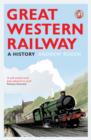
GREAT WESTERN RAILWAY - Andrew Roden

‘Great Western Railway – A History’ by Andrew Roden (Aurum Press; £18.99) is a book in which the enthusiasm and knowledge of the author shines through. Even if at times his zeal leads him to some rather flowery language. To be fair to him, he is willing occasionally to criticise ‘God’s Wonderful Railway’ (also known to its detractors as the ‘Great Way Round’). While acknowledging the genius of Brunel, who was appointed the first engineer of the railway, he is very critical of Brunel’s insistence on ‘broad gauge’, which was to cause problems for about 70 years. Nevertheless, it was his genius which created a railway that was as near straight and level as possible; a project which lead to the building of some of the great projects of the age – the Box Tunnel, the Albert Bridge over the Tamar and the long flat arch of Maidenhead Bridge which a lot of people predicted would collapse.

By the time I had read a few chapters, I had become quite a fan of the GWR, despite my first experience being evacuated on it to Cheltenham in 1940 and having to sit on a suitcase in the corridor of a blacked-out train which crawled from station to station. The only impression it left me with was the pattern on the suitcase! One of the most extraordinary stories was the building of the Swindon Loco Works which developed into the first great railway town. It enabled GWR to build, for most of its life, engines which were superior in power and efficiency to other companies. At the time of building the Swindon works, the railway was short of money so they did a deal with the contractor to build the works in exchange for the permanent lease on catering facilities at Swindon. In addition there were to be no other facilities between Paddington and Bristol and every train had to stop at Swindon for at least ten minutes; the deal becoming a millstone for many years. The GWR was a good employer and built above average houses for its workers plus schools and mechanics’ institutes. At various times, the GWR ran the longest non-stop passenger journey in the world; the worlds highest average speed rain and the first train to reach 100mph. The building of the Severn Tunnel, against all the odds, is a fascinating account of a largely forgotten engineering achievement.

Andrew Roden gets a bit technical at times, when discussing the merits of various wheel and cylinder arrangements on the locos designed by a series of brilliant engineers. I sometimes found that the number of small railway companies with similar names that were absorbed into the GWR a bit confusing and a map of the layout would have helped. Notwithstanding these, this is a fascinating book for both the railway enthusiast and layman because it contains interesting characters and good stories. It finishes with a chapter on the rescue of old locos and the rise of heritage railways.

Tuesday, 21 September 2010

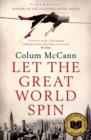
LET THE GREAT WORLD SPIN - Colum McCann

Two things led to this book. The recommendation of one of my more sensible customers, and the fact that it had a link to an event that has long fascinated me - the tightrope walk between the (then almost constructed) towers of the World Trade Centre in New York, in August 1974. It was good that they did lead me there, for few books have ever held me so well in their grip [maybe Birdsong or Owen Meany] as this did.

It is a story of two brothers, of New York,  poverty drugs and prostitution, despair at the loss of a child in war, artistic excess, frustration at the state of society: told as a series of stories, they are loosely intertwined with the bizarre stunt of Philippe Petit's walk in the sky and a tragic accident. The setting of those great twin towers and their ultimate demise, never mentioned but always in our minds, is masterful. They are connected so delicately and with such great writing that it sometimes takes your breath away. One passage stands out - there is a wonderful description of the effect the glass walls of the new twin towers had on birds, who would constantly fly, confused, straight into them, and the lady who kept collecting their bodies. It took me straight back to that dreadful afternoon of Sept 11th, 2001 when the bodies falling from the glass towers were not birds.

The Corrigan brothers grow up in the rough end of Dublin, and although told largely from the viewpoint of Ciaran, it is really his brother John [forever to be known just as Corrigan] who is the real subject of much of the tale. Drawn from an early age to look after the drunks and vagrants of Dublin, and the demons who drive them there. He is destined for radical priesthood, settling in the Bronx of a failing and bankrupt New York. He provides shelter and comfort for the drug-addicted street prostitutes, regarded by the police as a pimp and by the pimps as a madman.

At the same time Claire is a grieving mother, living in luxury in the Upper East Side, distraught at the loss of her son in a pointless act in Vietnam; only finding solace in a self-help group of mothers in the same position. Her husband is a judge, driven to distraction by the hopeless justice system he has to keep working, and driven to work harder by his grief.   Blaine and Lara are wealthy artists, making and consuming the most of what New York's artist community has to offer. Tilly and her daughter Jazzlyn, herself with baby daughters, are hopeless heroin-addicted cheap hookers, forever hoping for a promised land but ever-destined never to see it.

Written with the balance and skill of  Petit's skywalk, the collision of their worlds is beautiful. If I have a criticism, it is that having swept us along for the first 250 pages, the final 100 do not quite reach the high standard he has set himself. The writing is as good, but many sections seem to have little purpose and to tell us thing that we do not need to know, the circle of life having already been completed. It could be a case of less being more - but do not be put off, it is as good as anything I have read all year.

Wednesday, 15 September 2010

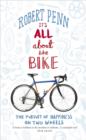
IT'S ALL ABOUT THE BIKE by Rob Penn

Some unfortunate souls in Mayfield will have noticed that on occasion I make my journey to work from Broad Oak by bicycle. This combines the merits of environmentally friendliness, a degree of becoming less unfit and a source of humour for those catching the ever deepening beetroot colour of my face as I struggle up Fletching Street Hill. So even though only equipped with a '£25 off eBay' cycle - I was fascinated to come across Robert Penn's book - 'It's all about the Bike - The pursuit of happiness on two wheels'  [Particular Books; £16.99 ].

Rob achieved a degree of fame, or notoriety as one of those intrepid souls who set off to cycle around the world, in his case taking  three  years and about 40,00 kms. He still rides every day and has an array of cycles for various uses - but it was not enough. He wanted the perfect bike, for him. Not a lurid off-the-shelf carbon fibre monstrosity for five thousand pounds, but a custom built, bespoke model, using the finest of components and as individual as a Saville row suit.

In searching for the components he tells the mechanical and social history of the bicycle, from its seventeenth century origins, through the penny farthing to the shape we now are familiar with. He looks at its role in early twentieth century emancipation and giving access to the countryside to people who previously would have struggled to leave their parish. He also examines the impact of fashions and racing on cycling technology, the transformations in the west coast of America in the eighties, the rise of the mountain bike and development of cycling friendly cities like Portland, Oregon, and the changes that these have driven.

He starts off being measured for the frame by an artisan frame builder in Stoke-On-Trent (Rourkes), to Brooks of Smethwick for a leather saddle, he goes to Germany for tyres (Continental), to Italy for the gears and brakes (Campagnolo) and for handlebars and front forks (Cinelli), to the USA for headset bearings (Chris King)and wheels (Gravy rims and assembling with  British Royce hubs and Belgian spokes) and finally home for building. In each location he finds a wonderful history of each component and why it has developed to where it is and what is in the future. Nearly every manufacturer is almost obsessive with commercial secrecy; "you are the only outsider ever to allowed through this door, and no cameras" is an oft repeated refrain.

In the end he has spent a lot of money on a dream, the best there is. And has told us the great story of the bicycle in the process.

Thursday, 22 July 2010

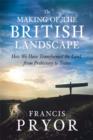
THE MAKING OF THE BRITISH LANDSCAPE - Dr Francis Pryor

When I heard that Francis Pryor, best known for his role in TV’s Time Team had written a book on ‘The Making of the British Landscape [Penguin - £30]’, my first though was - why? WG Hoskins work; ‘The Making of the English Landscape’ has always been the classic book on the subject and still seems relevant today. So why a major new treatise? In his introduction, Dr Pryor pays tribute to Hoskins but points out that his book was written in 1955 and that archaeological techniques have been improved and refined and that science has provided us with many new tools. Interpretation of finds has also changed; although I do wonder if he had his tongue in his cheek when he tells us that the people of the Western Isles were not savages but a civilised race, as there is now evidence that they drank claret!

Dr Pryor does demolish a number of cherished beliefs, but to be fair, does so with good cases backed up by evidence. He points out that the dark ages were not a time of regression but progress continued, perhaps at a slower pace. He indicates that at many times life was not so nasty or brutish, but that quite advanced social systems were in place. A cynic might think that the route to academic advancement is to rubbish the theories of other academics, but one does not get that feeling with this book. It is packed with facts and details, which are best taken in small bites, but it is a most comprehensive story of Britain from the Neolithic period to the present day, covering a lot of the urban as well as rural landscape. Like your reviewer, the author has a farm and pays tribute to the family farm in shaping the landscape and warns us of the effect of its demise. The book has a lot of photographs and drawings, although some of the black-and-white ones had a rather old-fashioned look, perhaps intended to be evocative of the past. It is not a cheap book, but at nearly 700 pages of text, plus notes and 250 photos and maps – it is a fascinating account of why Britain looks as it does today.

Friday, 16 July 2010

STRANGER ON THE SHORE - John Symons


‘Stranger on the Shore’ [Shepherd-Walwyn; £12.95] by local writer John Symons could easily be mistaken for another story of a family with little of interest to anyone outside that close group. Not so. It tells the tale of a family and one member in particular – the author’s father, so typical of those who gave so much in the last century, rising from the grinding poverty of Cornish fishing villages to a career in the Army, mostly in India. The slow, probably too slow, rise through the ranks; eventually becoming commissioned as an officer and leaving the Army after the War as a major. However, there is a shadow hanging over every page - the family is cursed with Huntingdon’s disease - a cruel, degenerative, and genetic, brain condition which had torn through the family removing many of its members well before their time. 

Of course at that time, little was known about the disease, indeed, while reading the book there was a feature on BBC Radio Four’s Today about developments in research on it. Find it here.

Rather than becoming self-pitying, it is written so well that this tale is inspiring. The author can write with great depth and beauty, he casts a shadow without becoming morbid. We are drawn to his family and do care for them. There are two particularly poignant pieces; the realisation that on the boat trip home from India after the war, at the height of his father’s career and powers was the first outward manifestation that something might not be right. The second was when his mother, suffering a crisis when realising that only decline would follow for her husband, used the stoic words of the Queen, when as a little girl her life was changed by her father’s unexpected accession to the throne: “We must make the best of it.”

It is a classic story of triumph over adversity and the faith that helps the family come to terms with the cruellest twist of fate. A hugely rewarding read.

Thursday, 20 May 2010

LAST NIGHT AT TWISTED RIVER -John Irving

First an admission, if I was pinned down and had to admit my favourite author and book, it would probably be John Irving and 'A Prayer for Owen Meany'. I find the epic nature of his finely drawn books, laid back humour and brilliant characterisation compelling; so I am not an utterly unbiased source on reviewing his latest offering. However, the master has been off-form of late - 'The Fourth Hand' while retaining the humour was far from his best and his last book 'Until I find you.' was well,  embarrassing. Is he past it?

It is said that all novels display an element of autobiography about them. If so, Irving had one extraordinary early life - from Homer Wells' teenage abortionist in 'The Cider House Rules' to Owen Meany's accidentally killing his best friend's mother with a baseball shot, teenage trauma is never far away.

In 'Last Night At Twisted River', the turning moment in a young life comes when the central character Dominic Baciagalupo is living with his widowed father in a New England logging camp in the 1950s. Being Irving, sex is never far away, and in this case it is the discovery of his father 'in flagrante' with a local woman and washer up, the 300lb - 'Injun Jane'. Our boy, fearing his father is being mauled by a bear, hits her on the head with an iron skillet, killing her outright. The rest, as they say - is history; as they flee the camp and Jane's partner, a vicious drunk of a local policeman, obsessed with revenge.

They are helped by a fellow river driver cum logger, who turns into one of Irving's finest creations. A rough, curmudgeonly and fiercely libertarian, almost wild man - Ketchum. He remains their protector from afar for the next fifty years and is a joy.

Life on the run over the following decades is a fine echo of American society over that time, and we see Dominic grow up to become a writer. It is during this period of his life that we see some fascinating thoughts that reflect Irving's own successes and views on his own carreer. The themes of many of Danny Angel's (Dominic's Nom de Plume) novels reflect those of Irving's and his criticism of the film industry no doubt reflects the fact that so few of Irving's books have been filmed, with the exception of the Oscar winning The Cider House Rules. Although I suspect that it is Ketchum who gives voice to Irving's politics.

This is, like most of his books, long - at 550 pages, but there is nothing that I would want to cut. I could happily have carried on reading it for months, I just wanted it to go on. It is not just a triumphant return to form, but I think that the best compliment I can pay it is that it is the sort of book you would expect from the author of  Garp, Cider House and Owen Meany - written with a life full of experience.

As our transatlantic cousins would say - Enjoy!

Thursday, 22 April 2010

THE INFINITIES - John Banville


John Banville is probably best known for his Booker Prize winning 'The Sea', and for being one of a generation of wonderful Irish writers who can be a bit too clever for us ordinary mortals. Some of my customers complain that they need a dictionary to accompany his books. I can't say I blame them. More recently he has also written detective thrillers set in 1950s Ireland under the pseudonym Benjamin Black which, being less intellectual, I thoroughly enjoy.

I approached 'The Infinities', which recently came out in paperback, with some trepidation. It tells the story of the final days of Adam Godley, surrounded by family in Ireland, told from the viewpoint of the Greek God Hermes, who happens to be overseeing matters and wickedly throwing various spanners into the works.

Would I be wowed or overwhelmed? I certainly started off wowed! How about this for an opening of any book, describing dawn?

"When darkness sifts from the air like fine soft soot and light spreads slowly out of the east then all but the most wretched of humankind rally."

or the running of a tap-

"The water, coiling from the tap like running metal, shatters on her knuckles in silvery streels."

Bliss - and you know you are starting on a pleasurable experience.

It is, in more ways than one, Divine. Banville takes each of the characters, over the course of the single day that the book encompasses, and mentally disects them, almost to the point of torture. He uses Hermes to twist them and discover their darkest truths and desires. It is dreamy, almost other worldly and at times painfully lucid, with a surprise around every corner.

Exultant and absolutely brilliant.

Friday, 16 April 2010

SOLAR - Ian McEwan


It is what the trade would call a ‘banker’; a new novel by Ian McEwan and with global warming as the backdrop. Sure fire winner, this. Unfortunately for me, I am not Mr McEwan’s greatest fan, and came to ‘Solar’ (£18.99, Jonathan Cape), fresh from one of my favourite writers, John Irving, which made the task a bit more challenging. At least it is a proper book, rather than his last offering ‘Chesil Beach’ which was more of a novella, almost a pamphlet!

'Solar' is the satirical story of Michael Beard, a frustrated Nobel Prize winning scientist who has traded, dined and slept on his early career success for far too long. He has been appointed to head a government think-tank on climate change, largely on the basis that a Nobel Prize winner on the letterhead adds a certain something to any project.

McEwan does not bless Beard with any real virtues: he is fat, lazy, bored and cynical. His fifth marriage is collapsing - to his shock, due to his wife’s infidelities rather than his. However, this lack of appeal is balanced by McEwan’s eye for detail and ability to translate that into a strong narrative and an ability to construct realistic characters out of a few phrases. We are told relatively little of the various other characters, especially the women in Beard’s life, yet we seem to know them.

Early on in the book, Beard is invited on a celebrity and artist filled trip to observe the effect of global warming on the Arctic ice cap. It is with a delicious sense of irony that he observes the chaos of equipping twenty souls with the necessary clothing for their polar expedition and stopping them from losing any, even in the confines of their ship base. How can they hope to save the world if they cannot even find their snow boots?

However it is an incident, on his return home that provides the turning point and entwines Beard in an ever more complicated personal and professional web. The book takes place over several periods of time in the last ten years and in locations as diverse as the Arctic Circle to the New Mexico desert. McEwan deftly ties the strings tighter until Beard, totally enmeshed in a personal and professional mess of his own making, gets an unlikely glimpse of some little redemption, just too late.

McEwan still may not be my favourite, but he is on good form here.

UPDATE

This book has been shortlisted for the 'Bollinger Everyman Wodehouse Prize for Comic Fiction', which comes as something of a surprise, being comic being something of a requirement I would have thought. It is certainly far lighter in style than earlier McEwan and darkly satirical, but more wry smile than comic. Still, what do I know?

Saturday, 10 April 2010

CURMUDGEON'S PASQUINADE

‘Lifestyle’ magazines - the bane of our times - the curse of the middle classes. Glossy lumps of previously innocent tree that drop though our letterboxes and obstruct the way out of village shops. Each month a species of lemur becomes extinct to give way to our insatiable desire to consume and aspire. We know that the laminated kitchen worktop will do the job; but we have seen an article about hand hewn granite worktops, lovingly prepared and installed by a local artisan for only the price of a new 4x4. There are glossy ads for antique Victorian cast radiators reconditioned in a Sussex farmhouse style. We can find garden offices (posh sheds) and Alpaca farmers (posh shepherds).

Fortunately there are exceptions to this nonsense. There are a few useful pages and the occasional useful magazine, even the odd (or very odd) book review. But above all else, there is one page that stands out from all the others – Magnet magazine’s ‘Curmudgeon’. A wondrous page of razor sharp observations, recanted in the most gloriously un-PC style. [Editor – this a book review, where is the book?] When, a few months ago, the proprietor of Magnet told me that she was thinking of putting together his articles in a book. I immediately said “What a good idea and can we have some?”. Now it is with us, hot off the press; a book of his (or maybe her) collected articles, and what a collection it is.

It runs from 1993 to 2008, the bulk of his writings in one volume. Being Curmudgeon, he has entitled it: “A Curmudgeon’s Pasquinade” [CMH. £9.99]. Apparently a ‘Pasquinade’ is a satire or lampoon; I suspect that Curmudgeon uses words like this in daily conversation.

The pen, when used as a sword is a marvellous tool, and he wields it to great effect. He cuts down to size the pomposity of politicians and officialdom and slices through the idiocy of modern television and celebrity culture. In a written version of the great observational comedians, he finds humour in the frustrations of modern life. His writing is of great quality, he knows exactly how to develop an often absurd storyline in order to maximize the ridicule heaped upon his subject. He has a healthy contempt for his targets even more so for any notion of political correctness, tempered with a firm libertarian streak.

It is amazing, looking back over the years that the book covers, how consistent he has been and how consistently idiotic his subjects have been, just change the names of the celebrities, companies and politicians and the 1990’s stories are today’s. Many of the one hundred articles are illustrated by some superb cartoons by Manny Galitzine.

I have just had a hugely amusing weekend, dipping in and out of this book. It’s not often I laugh out loud while reading. I loved it.

Now, I wonder when he is going to take on lifestyle magazines……

Friday, 9 April 2010

BROOKLYN - Colm Toibin

First published in the Mayfield and Five Ashes Village newsletter, March 2010

Having been in the running for nearly every prize going this year, Colm Toibin’s novel ‘Brooklyn’ is now out in paperback (Penguin - £7.99). Beginning in Enniscorthy in the south-east of Ireland in the early 1950s, Brooklyn centres on the young adulthood of Eilis Lacey, who lives with her mother and elder sister Rose, after their father’s death and three brothers’ departure to England in search of work. There are no prospects for Eilis in the town. She studies bookkeeping and longs for a good clerical post and smarter clothes like Rose’s, but the best on offer is a Sunday job in Miss Kelly’s grocery shop.

Eilis’s escape comes in the form of another job offer. Father Flood, back visiting his hometown after emigrating to the United States, is shocked to discover a young woman of Eilis’s potential crabbed inside Miss Kelly’s corner shop, so promises to find her work and lodgings in Brooklyn. “It’s full of lovely people. A lot of life centres round the parish, even more than in Ireland. And there’s work for anyone who’s willing to work.”

Eilis’s journey to America is one of cumulative grief. First she goes to Liverpool where her brother closest in age meets her and takes her for a good meal, in case the food on the boat is “not to her liking”. She does not know whether or not to embrace her brother, they have never embraced before. Eilis boards the ship to New York, to find herself utterly alone among passengers selfish enough to lock a seasick person out of the lavatory. On the voyage out, Eilis is struck suddenly by the inappropriateness of her going to America instead of Rose; then, in a moment of awed horror, she realizes the extent of her sister’s sacrifice: someone has to stay at home, and Rose wanted Eilis to be free.

After a harrowing journey, she arrives in Mrs Kehoe’s Brooklyn boarding house, with exclusively Irish women as fellow lodgers. Here, Eilis is young and vital enough to move beyond despair to find friendship, even love, in her new life. She works at a department store on Fulton Street. Clothes are the centre of her working life, a subject of intense discussion among her fellow lodgers, and, most importantly, a reminder of her sister Rose, whose poise and elegance used always to seem beyond Eilis.

Tóibín patiently dramatizes Eilis's homesickness and her brushes with enforced American good cheer, her relations with her fellow inmates at an all-Irish boarding house, her work at a moderately enlightened department store, her night classes, and her pleased discovery of all-night heating and affordable women's fashions. In time she meets a handsome Italian-American man who speaks seriously and tactfully of marriage. Then a death summons her back to Ireland, where she finds that America has made her glamorous and desirable, and faces a choice between the old life and the new.

Sometimes it's what an author doesn't say - what's written between the lines that's so forceful. Tóibín's spare but elegant prose seemed to reflect the rhythms of Eilis Lacey's life and personality well. Brooklyn is a story of an ordinary young woman dealing with the daily business of living. Only even for the most average of us, sometimes life is anything but easy or ordinary. Although Brooklyn has the makings of a historical novel, set in 1950s Ireland and New York, It's very literary but with all the trappings of a place and time lost to us now, which I thought Tóibín evoked perfectly with the all the right sights, sounds and particularly the mores of the period. He deals delicately with difficult issues (for 1950s New York) of Eilis’s supervisor’s wistfully uncertain sexuality and the decision of her employer to admit coloured customers.

Brooklyn is possibly Colm Tóibín’s most beautifully executed novel to date. Reading him is like watching an artist paint one small stroke after another until suddenly the finished picture emerges to brilliant effect.

ORDINARY THUNDERSTORMS - William Boyd

First published in the Mayfield and Five Ashes Village Newsletter, Febraury 2010.

First, a bit of book trade news. The last twelve months have been the toughest in living memory Borders, and several regional and specialist chains have gone bust and Waterstones and British Bookshops have both posted multi-million pound losses. Yet in this corner of Sussex there are four independent bookshops in a ten mile radius. Rather more than our brilliant business modelling (don’t get so big you can’t afford the losses!) it is due to the fantastic support we get from our loyal customer base, for which we thank you, very much.

There is one of those small, yet fundamental changes coming upon us. The paper Booktoken will be no more - bookshops are joining the rest of the retail world and going electronic and as from Feb 1st, will only sell the new cards. Paper tokens will still be accepted indefinitely; an advantage they will keep over the cards, which will only remain valid for two years from issue.

I must confess to being a big fan of William Boyd. He writes superbly, can deliver a convoluted yet understandable plot and constantly varies his writing format - satirical farce, epic fictional autobiography, stories told in the third person and in the first. He is not one to sit back on his laurels and ‘churn them out’ as many of his contemporaries are happy to do. His last novel ‘Restless’ won a hatful of awards, including the Costa.

‘Ordinary Thunderstorms’ [Bloomsbury £18.99HB and £11.99 large PB] is probably his most complex so far. It is a thriller and tells the story of the unfortunate Adam Kindred, a research climatologist in London for a job interview, whose chance encounter with a man in an Italian restaurant leads to a series of terrifying coincidences that leave him stripped of everything he once took for granted. Framed for a murder he did not commit and finding himself at the centre of a pharmaceutical corruption scandal, Kindred is forced to disappear between the cracks of the sprawling modern metropolis.

The police are on his tail and so, for reasons that later become clear, is Jonjo Case, a psychopathic ex-SAS contract killer. Ditching his mobile and credit cards, it proves surprisingly easy for Kindred to erase the electronic trail of his identity. When he joins a church that offers free meals to the homeless, his new anonymity is underlined by a badge that gives him only a number, 1603, to denote his place in the faceless congregation.

Soon, Kindred slips inexorably into the ranks of the unnoticed. His new acquaintances are found among the dropouts who teem underneath the city's surface. Boyd takes the framework of a thriller and manipulates it to ask questions about identity, about what makes us human when all the outward manifestations of our individuality have to be abandoned in the name of survival. In Boyd's city, there is safety in sameness and the incuriosity of strangers. My only real criticism is of the central character - I had no real sympathy for him. He seemed to vary between being too stupid to survive in these circumstances to utter amorality and cynicism. We soon find that as well as losing everything he has in this chaotic coincidence; he has already thrown a comfortable life and marriage away for a sexual encounter with an infatuated student.

A wonderfully crafted, if at times flawed novel; many hallowed reviewers have described it as something of an allegory for our times, in that case - ouch!

MUFFIN & SCRUFF

First published in the Mayfield and Five Ashes Village newsletter, April 2010.

I have written before about the dubious benefits of visits from would-be authors, visiting with their sometimes less than riveting reads, and also the joys of discovering a local book that really hits the mark. So it is this month.

A few months ago, Mayfield resident Deb Findlater approached me with an idea for a children’s book that she was writing, mainly for bedtime stories for her grandson, Jake. It looked nice and appealing as an idea so I did not put her off. Just as well, as she came back in during February and her book had blossomed from a charming and quirky piece to the fantastic finished product “Muffin and Scruff”.
Most books of this type, even if the story is well written, have lots of rough edges, often literally; as the page setting, typeface, binding etc are some way off the professional standard. Not with this one though – Deb must have spent months polishing it into shape, it is just right, spot-on. A quality product, spiral bound with thick glossy card pages and perfectly laid out with beautiful illustrations by Janet Duchesne. Child friendly and child proof.
There are ten stories each one revolving around our two farmyard friends, “Two little chickens always up to mischief.” and their lives on the farm. Not only are the stories charming for young children, but they also have a moral element in that the tales revolve around thinking about others and the results of their actions. They are cleverly thought out and suitable both as bedtime stories for little ones and reading stories for when they get older.

At £8.75 for ten stories it is great value for money. A mass market publisher would have split it up and sold it for £4.99 for each story. If you are after an egg-related present for Easter – this is it! Even better, Deb will be in the shop on the morning of Easter Saturday to sign copies.