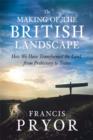
Dr Pryor does demolish a number of cherished beliefs, but to be fair, does so with good cases backed up by evidence. He points out that the dark ages were not a time of regression but progress continued, perhaps at a slower pace. He indicates that at many times life was not so nasty or brutish, but that quite advanced social systems were in place. A cynic might think that the route to academic advancement is to rubbish the theories of other academics, but one does not get that feeling with this book. It is packed with facts and details, which are best taken in small bites, but it is a most comprehensive story of Britain from the Neolithic period to the present day, covering a lot of the urban as well as rural landscape. Like your reviewer, the author has a farm and pays tribute to the family farm in shaping the landscape and warns us of the effect of its demise. The book has a lot of photographs and drawings, although some of the black-and-white ones had a rather old-fashioned look, perhaps intended to be evocative of the past. It is not a cheap book, but at nearly 700 pages of text, plus notes and 250 photos and maps – it is a fascinating account of why Britain looks as it does today.


No comments:
Post a Comment