Thursday, 22 July 2010

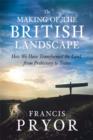
THE MAKING OF THE BRITISH LANDSCAPE - Dr Francis Pryor

When I heard that Francis Pryor, best known for his role in TV’s Time Team had written a book on ‘The Making of the British Landscape [Penguin - £30]’, my first though was - why? WG Hoskins work; ‘The Making of the English Landscape’ has always been the classic book on the subject and still seems relevant today. So why a major new treatise? In his introduction, Dr Pryor pays tribute to Hoskins but points out that his book was written in 1955 and that archaeological techniques have been improved and refined and that science has provided us with many new tools. Interpretation of finds has also changed; although I do wonder if he had his tongue in his cheek when he tells us that the people of the Western Isles were not savages but a civilised race, as there is now evidence that they drank claret!

Dr Pryor does demolish a number of cherished beliefs, but to be fair, does so with good cases backed up by evidence. He points out that the dark ages were not a time of regression but progress continued, perhaps at a slower pace. He indicates that at many times life was not so nasty or brutish, but that quite advanced social systems were in place. A cynic might think that the route to academic advancement is to rubbish the theories of other academics, but one does not get that feeling with this book. It is packed with facts and details, which are best taken in small bites, but it is a most comprehensive story of Britain from the Neolithic period to the present day, covering a lot of the urban as well as rural landscape. Like your reviewer, the author has a farm and pays tribute to the family farm in shaping the landscape and warns us of the effect of its demise. The book has a lot of photographs and drawings, although some of the black-and-white ones had a rather old-fashioned look, perhaps intended to be evocative of the past. It is not a cheap book, but at nearly 700 pages of text, plus notes and 250 photos and maps – it is a fascinating account of why Britain looks as it does today.

Friday, 16 July 2010

STRANGER ON THE SHORE - John Symons


‘Stranger on the Shore’ [Shepherd-Walwyn; £12.95] by local writer John Symons could easily be mistaken for another story of a family with little of interest to anyone outside that close group. Not so. It tells the tale of a family and one member in particular – the author’s father, so typical of those who gave so much in the last century, rising from the grinding poverty of Cornish fishing villages to a career in the Army, mostly in India. The slow, probably too slow, rise through the ranks; eventually becoming commissioned as an officer and leaving the Army after the War as a major. However, there is a shadow hanging over every page - the family is cursed with Huntingdon’s disease - a cruel, degenerative, and genetic, brain condition which had torn through the family removing many of its members well before their time. 

Of course at that time, little was known about the disease, indeed, while reading the book there was a feature on BBC Radio Four’s Today about developments in research on it. Find it here.

Rather than becoming self-pitying, it is written so well that this tale is inspiring. The author can write with great depth and beauty, he casts a shadow without becoming morbid. We are drawn to his family and do care for them. There are two particularly poignant pieces; the realisation that on the boat trip home from India after the war, at the height of his father’s career and powers was the first outward manifestation that something might not be right. The second was when his mother, suffering a crisis when realising that only decline would follow for her husband, used the stoic words of the Queen, when as a little girl her life was changed by her father’s unexpected accession to the throne: “We must make the best of it.”

It is a classic story of triumph over adversity and the faith that helps the family come to terms with the cruellest twist of fate. A hugely rewarding read.