Sunday, 13 February 2011

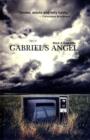
GABRIEL'S ANGEL by Mark A Radcliffe

I came across this book while looking at the website of the rather wonderful bookshop Much Ado Books in Alfriston. Their recommendation of Gabriel's Angel [£7.99; Bluemoose] was good enough to give it a try and I am thrilled that I did. It is a singularly appropriate recommendation from a shop named after one of the Bards darkest and bawdiest romps, but it offers even more than that, it has a rare tenderness that sits so well alongside the humour. Finding out that that the author is a psychiatric nurse is not a surprise, that this is his first novel is a shock.

What is your idea of hell? A therapy group? In the afterlife? With the person who ran you over you? And a serial assassin and his lastest victim? Gabriel is in just this position, a jaded journalist who has just lost his, not very good, job; and who is going through IVF treatment with his girlfriend Ellie. Not only is he run over, but he awakes only to find himself in a therapy group with two angels, Christopher and Clemitius overseen by Peter. Their job is to encourage the members of the group to do well enough to pass into heaven, maybe return to earth, or hell, or worse - more therapy.

Gabriel is also joined in this group by Julie, the woman who ran him over and subsequently hit a lampost, distracted by just having left her faded-rockstar-and-waster boyfriend,  James. Also joining them are Kevin, a low rent assassin and his latest victim Yvonne, an alcoholic business woman. Kevin's fate is a wonderful fall from disgrace, sheer joy.  The problem is - are they in heaven or hell? Is everything what it seems? Is everyone playing by the rules?

The stirring of all these ingredients and their backstories is deftly done, the set piece black comedy of Kevin's death, the attempt to continue IVF with the comatose Gabriel and the final gathering of James's rock group are worthy of Tom Sharpe at his best.

The tenderness of dealing with those left behind, new loves, old friendships, grief and frustration is a revelation. The dialogue is the work of an experienced hand, not a first time writer.

One of the better known lines from Much Ado About Nothing is "..it is much better to cry at rejoicing, than to rejoice at crying.".  It would be quite possible to cry and rejoice in the sadness and comedy of this wonderful book.

It is a sheer joy. Absolutely marvellous!

P.S. - The author is appearing at a talk for Much Ado books, on 30th March. To find out more click here.

Friday, 14 January 2011

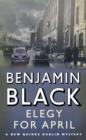
ELEGY FOR APRIL by Benjamin Black

Benjamin Black is the 'nom de plume' of Booker prize winning novelist John Banville, when in crime writing mode. This is his fourth such novel, and the third set in 1950s Dublin with its main protagonist the irrascible, hard drinking pathologist - Quirke.

Indeed early on in this story, Quirke emerges from a period drying-out at the House of St John of the Cross. On his return he is to find that his daughter is concerned that her best friend, April Latimer, has gone missing and has not told anyone in her close knit circle where she was going. April is a doctor and part of a well connected Dublin family, her uncle is Minister of Health and her father was a celebrated leader of the GPO uprising in 1916, become  a great cardiologist before his untimely death. Let the dice roll.

Although the book retains the foggy atmosphere of a depressed Dublin and the traditional hallmarks of drink, bad weather, Quirke's friend Inspector Hackett,and well connected families and above all exceptional writing - There is something lacking. The oppressive, all-enveloping power of the Catholic Church that dominates the previous Quirke novels 'Christine Falls' and 'The Silver Swan' is not as obviously present, becoming more of a matter for ridicule. The complicated relationships within Quirke's family seem to have settled down.

New factors have arrived though, Quirke's [and the Irish] relationship with alcohol are  well examined as is racism in that time. There is a new found lightness to Quirke, typified by his purchase of a car and approach to driving it which adds fun to the most dramatic of scenes.

My main complaint is the closing of the plot, this writing deserves better, it better suits a Val McDermid or similar. It  smacks of being written for TV. With Brendan Gleeson in the role of Quirke, worse has been done!

Being the least good of the Quirke series is no great failing. It is a bit like being called the 'worst' European Cup winning Liverpool team. It is still up there with the best.

Saturday, 1 January 2011

SAD NEWS ABOUT LIBRA

Sadly, this will be one of the final pieces for the newsletter from Libra. We have taken the extremely tough decision that we will not be continuing to run the shop at the end of our lease in March. We have put the business on the market, and would sell either as a going concern, in the current location or elsewhere, or would consider separating off stock or fittings that might have some specialist interest to existing businesses, like local history books etc. Our intention is that in the New Year we will be having a major sale and there will be great deals, lots at half price or less, to be had on stock books and CDs. We expect to actually stop trading at the end of February. In the meantime, if we are able to sell all or part of the business, we will let you know.

Amazingly, we have been here for nearly five years and in that time we have seen great changes in both the village and the book trade. When we took over from Chris and Jan, all of the five other shops in ‘our’ little row were under different ownership or branding as were PinUps and Mirabelle, the Post Office, Burnetts, Elizabeth, Dark Horse, Peckish, Sweets and Treats, Flower House, the Vets, Osteopath, Dry Cleaners and Butchers. We have lost a Newsagent, Ironmonger, Travel Agent, two Electrical shops and a shoe shop. And I bet I have forgotten a few! When did this all change? I think the answer is – in the best way, without us noticing very much - evolution.

As for the book trade, revolution has been the message. Two of the three main book suppliers merged and got taken over by Woolworths…enough said. Supermarkets decided that books are a good thing to get into and have discounted massively. And then there is the growth of Amazon which has become dominant in so much of entertainment. Added to this, there is a digital revolution just around the corner - the Kindle has been one of this years ‘must have’ Christmas presents, and in the next year or so electronic readers will become mainstream.

Anyone who has been into Tunbridge Wells recently will be aware of the great changes affecting retail trade, out of town retail parks are thriving, whilst the town centre is struggling. Just as the housewife of the 1950s would have been appalled to have to serve herself, supermarket style - in the first great drive to cut costs and boost margins by Mr Sainsbury – the change we now encounter is also dominated by price and discount, and the ability of the internet to deliver it to our own front door. It is no coincidence that the changes I outlined in Mayfield have been away from selling things to selling services. Fortunately, we cannot get our crooked backs or ailing pets made better by a computer!

The painful reality is that the days of the truly independent bookshop have gone: with a few notable exceptions like Daunts in London, most that are still operating are doing so with some form of personal or cross-subsidy and skeleton staffing or are really coffee shops who sell books. The chains are not safe either - as I write this I see that Waterstones have announced their figures for this year – losses down to £9m from £12m, with falling sales, ie any gains being made by cutting costs, not growth.  In our case we have no space for coffee and tables with books and if we cut anything else we will not actually be open at all and have to draw a line at any more personal subsidy of the business, so the end must come.

I was told by one local businessman that running a business in Mayfield is not so much a financial decision as a form of therapy! Very true! But the value of the therapeutic side should not be underestimated, it is a pleasure to be in business in Mayfield and I will greatly miss conversations with customers on a diverse range of subjects from books, literature and local history to politics, cookery, sailing, American Football and a lot else as well. My own literary horizons have been not so much moved as torn open: thanks to customer recommendations I have discovered (amongst others) Arabic, African, Asian, American and Irish authors who I would never have considered looking at. But I still cannot be persuaded of the merits of Martin Amis and Ian McEwan!  However, I will not miss the daily requests for a book ‘at the Amazon price’, or ‘it’s half that in Sainsburys!’. Sadly, that is the direction we are going in.

Finally, we must say a big thank you to all who have supported us over the last five years, without all those who believe in keeping village facilities going by not grabbing the last penny of discount, we would never even have got this far. Thank you.

Monday, 13 December 2010

FREEDOM - JONATHAN FRANZEN

"The Great American Novel Of Our Times", so we are told, heir to Updike etc. Certainly 'Freedom' has been one of the most hyped novels to cross the pond for some time. I use the term novels deliberately to avoid confusion with Messrs Brown, Paterson etc. I am a Franzen 'virgin', and with the noble exception of Irving, not a great American literature reader.

It was certainly a very enjoyable read, no great adventure but beautifully drawn characters. Straight out of the frustrated mid-west came Patty and Walter and their trials and tribulations. Patty, the never-quite-made-it college basketball star, who escapes from a sucessful Jewish New York family, becomes a housewife, then depressive; and Walter, her nerdy, environmentalist and steady-as-a-rock husband, always in the shadow of his best friend; carpenter and almost-failed-rockstar Richard. It tells the story of their university days together and their troubled marriage, the wars they seem unable to prevent breaking out around their family, parents, children and siblings. It is told in a sometimes bewildering variations of time frames, jumping backward and forward, but ever moving forward.

Each character seems to be a classic, maybe stereotypical version of the American psyche. Redneck racists, rural poor alcoholics, earnest Democrats, grasping Republicans, corrupt corporations, fanatical students. They are all here in a mix that encompasses the last forty years of the American Dream together with all its disappointments. It does go wider than being just the American novel, it relates to so many of us. It reeks of inter-generational ambition, disappointment and disapproval. It is the story of a family, it could equally apply to the lives of so many of us. With a bit of tweaking, I can have great empathy for Walter, a troubled soul with his heart in the right place, but possibly the only character who could be liked.

Well - is it the Great American Novel? No- its too good for that!

Monday, 22 November 2010

NIGHT SCENTED and WASP WAISTED by David Barrie

There has long been a strong tradition of Continental thriller fiction that sells well in Britain, from Simenon’s Maigret to Mankell’s Wallander. One of the book trade’s recent ‘big’ questions is ‘what are we going to find to replace the Larsson trilogy?’ The ‘Millenium’ series has been a huge success internationally, deservedly so. Although dark and often gruesome, they have raised the bar on thriller fiction, in no small part to superb translations. But Stieg Larsson famously died before his works achieved their success, so that well is dry. What next? Mankell is revisiting Wallander next year, not doubt encouraged by TV sales. Some have put their money on Jo Nesbo and ‘The Snowman’, but I found that crude, derivative and clumsily translated. The best I have yet seen to get anywhere near to the dizzy heights of Larsson is a pair of new novels by Paris-based Scot – David Barrie. Like Larsson, he effectively uses the environment it is set in. Rather than the bleak cold of Sweden, it is the ultra-chic world of fashion and high society in Paris that provides the backdrop and a fallen-from-favour spy is the policeman/ sleuth.

In Wasp-Waisted (John Law media; £7.99) - A young model is found dead in a luxury hotel in Paris. A stunning photo of the scene features on the cover of the country's top-selling scandal sheet. It was delivered before the police found the body. In a city obsessed with images of perfection, the murderer's artistic talents are the object of much admiration. It's Franck Guerin's first criminal case. Used to the murky world of national security, he has to learn to play by the rules. Not so easy when your only clue is the ultra-chic lingerie in which the victim was draped. The fashion trail takes him into a universe of desire, deceit, beauty and profit. As the victims mount and the images roll in, Franck has to train his eye to spot the killer's signature. Not to mention whoever is collecting photos of him.

In Night-Scented (John Law media; £7.99) - Isabelle Arbaud, as acerbic as she is ambitious, is determined to provoke a revolution in the elitist world of luxury brands. She has poached her rival’s most talented perfumer in order to invent an irresistible scent that will catapult her upstart fashion house to the head of the pack. Someone out there doesn’t want her to succeed. The investors who bankroll her efforts keep dying in circumstances which are, to say the least, suspicious. One is run off the road. Another is found shot in the head. Franck Guerin takes on the case. As other killings follow, however, he begins to wonder whether the real explanation for what is happening lies elsewhere – with an enigmatic homeless man who hovers on the periphery of each crime.

Even better, we have both books on sale at half price.

For those who like ‘world music’, or are looking for that different present, we have a new range of World Music CDs by ARC to go with our Naxos classical range and also priced at £5.99. So if you like Salsa or Bagpipes, Kalinka or Panpipes, come and have a look.

Monday, 4 October 2010

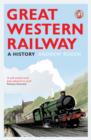
GREAT WESTERN RAILWAY - Andrew Roden

‘Great Western Railway – A History’ by Andrew Roden (Aurum Press; £18.99) is a book in which the enthusiasm and knowledge of the author shines through. Even if at times his zeal leads him to some rather flowery language. To be fair to him, he is willing occasionally to criticise ‘God’s Wonderful Railway’ (also known to its detractors as the ‘Great Way Round’). While acknowledging the genius of Brunel, who was appointed the first engineer of the railway, he is very critical of Brunel’s insistence on ‘broad gauge’, which was to cause problems for about 70 years. Nevertheless, it was his genius which created a railway that was as near straight and level as possible; a project which lead to the building of some of the great projects of the age – the Box Tunnel, the Albert Bridge over the Tamar and the long flat arch of Maidenhead Bridge which a lot of people predicted would collapse.

By the time I had read a few chapters, I had become quite a fan of the GWR, despite my first experience being evacuated on it to Cheltenham in 1940 and having to sit on a suitcase in the corridor of a blacked-out train which crawled from station to station. The only impression it left me with was the pattern on the suitcase! One of the most extraordinary stories was the building of the Swindon Loco Works which developed into the first great railway town. It enabled GWR to build, for most of its life, engines which were superior in power and efficiency to other companies. At the time of building the Swindon works, the railway was short of money so they did a deal with the contractor to build the works in exchange for the permanent lease on catering facilities at Swindon. In addition there were to be no other facilities between Paddington and Bristol and every train had to stop at Swindon for at least ten minutes; the deal becoming a millstone for many years. The GWR was a good employer and built above average houses for its workers plus schools and mechanics’ institutes. At various times, the GWR ran the longest non-stop passenger journey in the world; the worlds highest average speed rain and the first train to reach 100mph. The building of the Severn Tunnel, against all the odds, is a fascinating account of a largely forgotten engineering achievement.

Andrew Roden gets a bit technical at times, when discussing the merits of various wheel and cylinder arrangements on the locos designed by a series of brilliant engineers. I sometimes found that the number of small railway companies with similar names that were absorbed into the GWR a bit confusing and a map of the layout would have helped. Notwithstanding these, this is a fascinating book for both the railway enthusiast and layman because it contains interesting characters and good stories. It finishes with a chapter on the rescue of old locos and the rise of heritage railways.

Tuesday, 21 September 2010

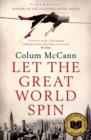
LET THE GREAT WORLD SPIN - Colum McCann

Two things led to this book. The recommendation of one of my more sensible customers, and the fact that it had a link to an event that has long fascinated me - the tightrope walk between the (then almost constructed) towers of the World Trade Centre in New York, in August 1974. It was good that they did lead me there, for few books have ever held me so well in their grip [maybe Birdsong or Owen Meany] as this did.

It is a story of two brothers, of New York,  poverty drugs and prostitution, despair at the loss of a child in war, artistic excess, frustration at the state of society: told as a series of stories, they are loosely intertwined with the bizarre stunt of Philippe Petit's walk in the sky and a tragic accident. The setting of those great twin towers and their ultimate demise, never mentioned but always in our minds, is masterful. They are connected so delicately and with such great writing that it sometimes takes your breath away. One passage stands out - there is a wonderful description of the effect the glass walls of the new twin towers had on birds, who would constantly fly, confused, straight into them, and the lady who kept collecting their bodies. It took me straight back to that dreadful afternoon of Sept 11th, 2001 when the bodies falling from the glass towers were not birds.

The Corrigan brothers grow up in the rough end of Dublin, and although told largely from the viewpoint of Ciaran, it is really his brother John [forever to be known just as Corrigan] who is the real subject of much of the tale. Drawn from an early age to look after the drunks and vagrants of Dublin, and the demons who drive them there. He is destined for radical priesthood, settling in the Bronx of a failing and bankrupt New York. He provides shelter and comfort for the drug-addicted street prostitutes, regarded by the police as a pimp and by the pimps as a madman.

At the same time Claire is a grieving mother, living in luxury in the Upper East Side, distraught at the loss of her son in a pointless act in Vietnam; only finding solace in a self-help group of mothers in the same position. Her husband is a judge, driven to distraction by the hopeless justice system he has to keep working, and driven to work harder by his grief.   Blaine and Lara are wealthy artists, making and consuming the most of what New York's artist community has to offer. Tilly and her daughter Jazzlyn, herself with baby daughters, are hopeless heroin-addicted cheap hookers, forever hoping for a promised land but ever-destined never to see it.

Written with the balance and skill of  Petit's skywalk, the collision of their worlds is beautiful. If I have a criticism, it is that having swept us along for the first 250 pages, the final 100 do not quite reach the high standard he has set himself. The writing is as good, but many sections seem to have little purpose and to tell us thing that we do not need to know, the circle of life having already been completed. It could be a case of less being more - but do not be put off, it is as good as anything I have read all year.